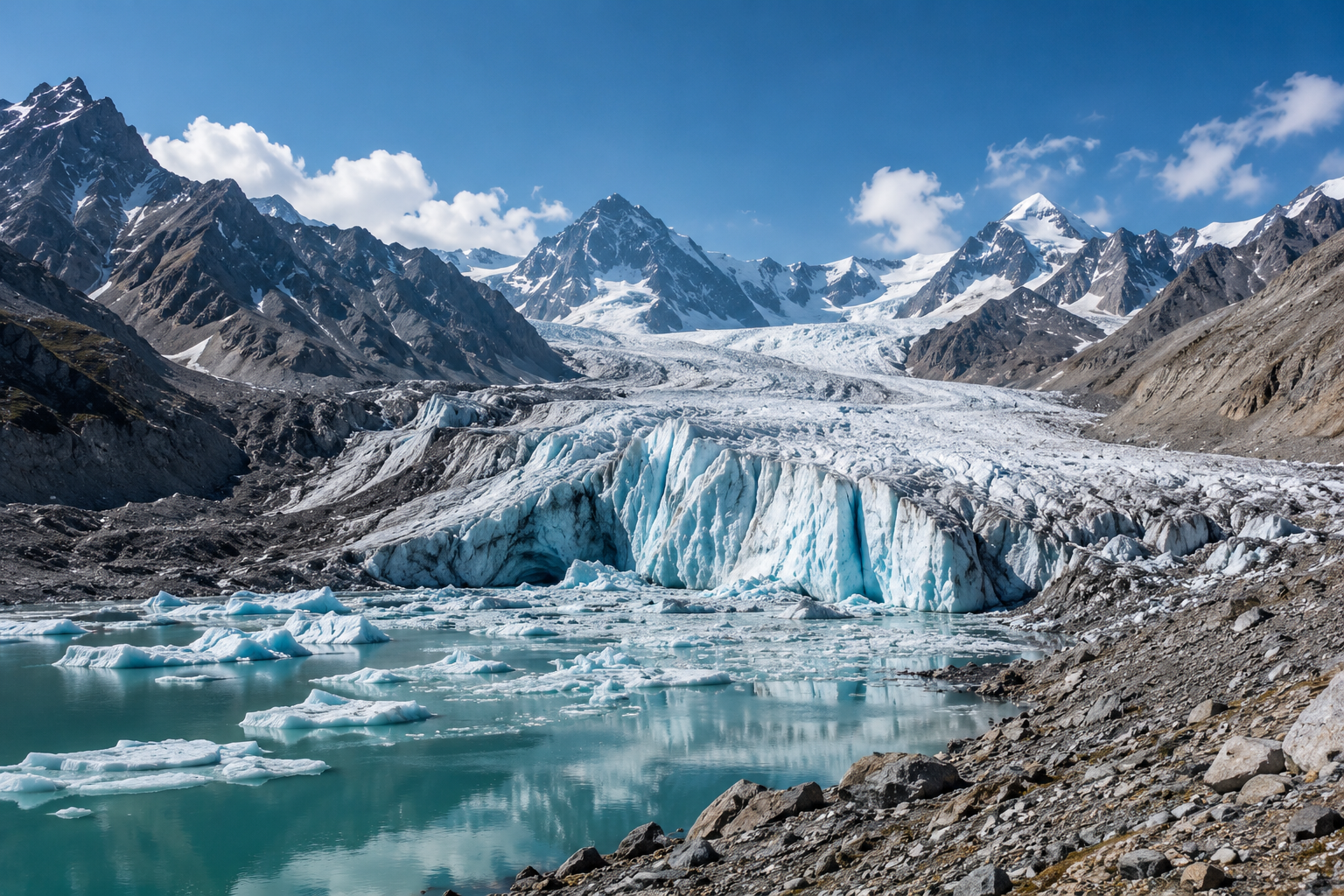
On 22 October 2026, the Potsdam Institute for Climate Impact Research (PIK) presented the first comprehensive interdisciplinary assessment of climate change impacts across all five Central Asian countries: Kazakhstan, Kyrgyzstan, Tajikistan, Turkmenistan, and Uzbekistan. The assessment was published as a book by Springer Nature and involved 86 authors from 37 organizations. According to the assessment, glaciers in the region could lose up to 85% of their volume by 2100.
The authors note that glacier melt is currently providing a temporary increase in water flows to glacier-fed rivers, but a rapid decline in river runoff is expected in the future. Depending on the climate scenario, river runoff during July–September could decrease by up to 50% by 2050. This period is particularly important for agriculture, as irrigated farming accounts for up to 92% of water withdrawals in some countries in the region. Declining water resources could intensify competition for water among agriculture, hydropower, and countries across the region.