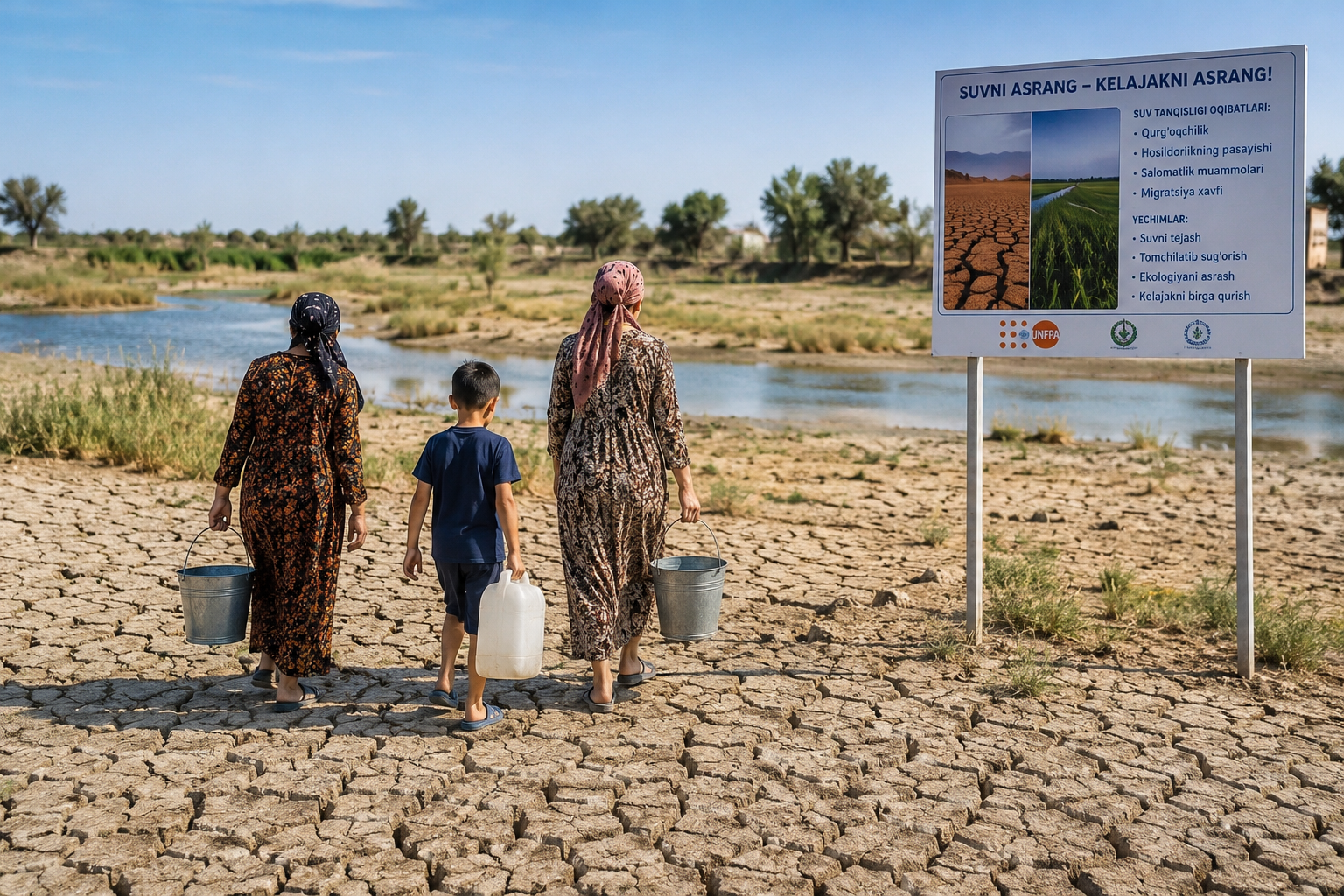
A new study by the United Nations Population Fund (UNFPA) and Uzbekistan’s Institute for Macroeconomic and Regional Studies examines how climate change affects household health, income and demographic decisions.
The research draws on systems modelling and household focus groups in Karakalpakstan and Surkhandarya. It identifies distinct regional climate risks: Surkhandarya faces extreme heat and dust storms, while Karakalpakstan experiences water scarcity and air pollution linked, among other factors, to the Aral Sea crisis.
According to the study, climate-related pressures affect household budgets through additional spending on medicines, healthcare and drinking water. Economic uncertainty also influences migration decisions and family planning. The researchers highlight the need to integrate demographic factors into climate policy, social protection and regional resilience measures.