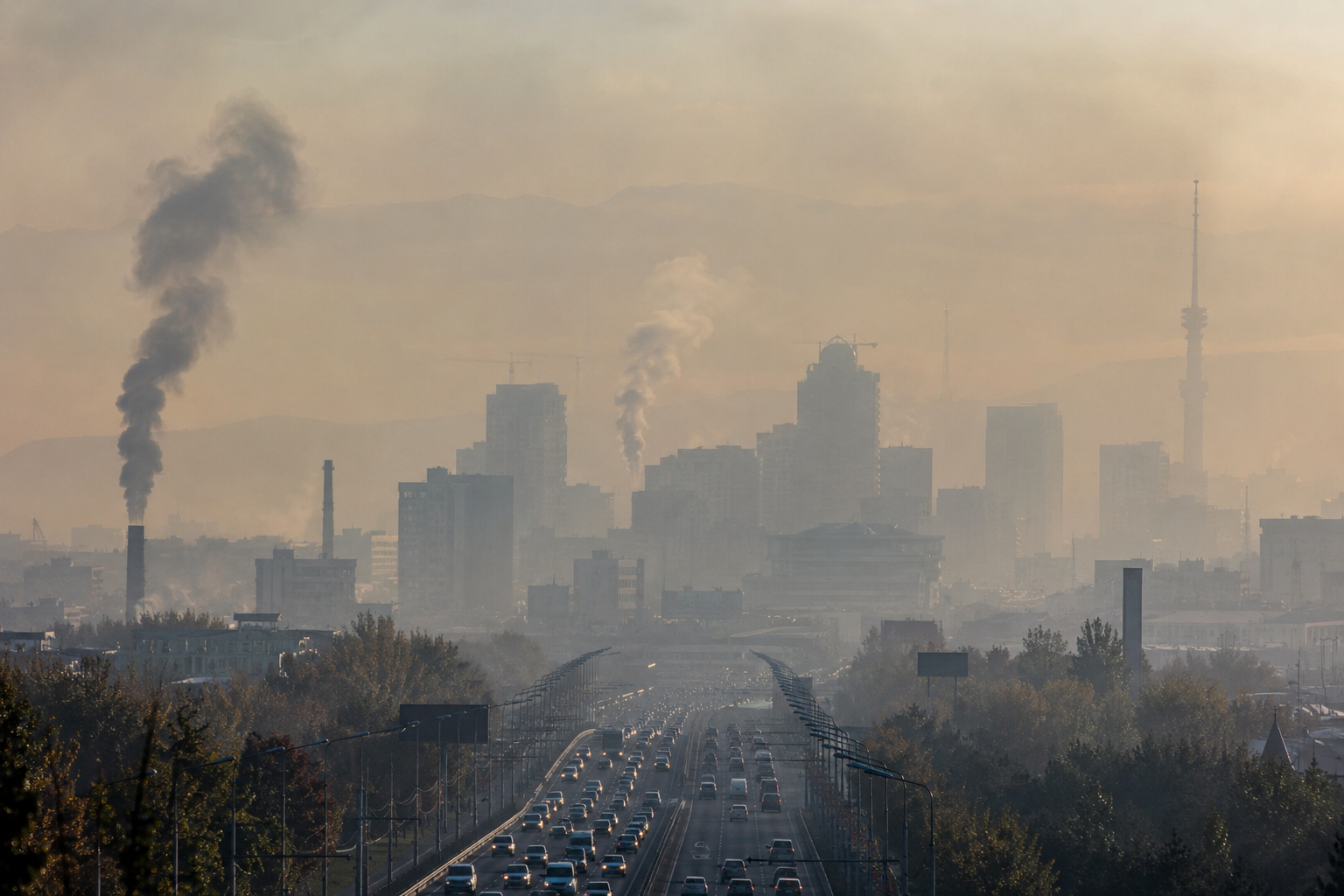
According to the institute, on October 26, the Air Quality Index (AQI) exceeded 100 in six of the eight Central Asian cities monitored. In Tashkent, the average daily AQI rose from 93 to 164 over five days. The main contributing factors included an anticyclone, weak winds, and a temperature inversion that prevented pollutants from dispersing.
An analysis of 12 PM2.5 samples collected in three districts of Tashkent between October 12 and 16 found that natural dust accounted for an average of 39.7% of the particles, while 42.6% were associated with fuel combustion. However, the samples were collected before the peak pollution episode at the end of the month and therefore do not represent the exact composition of the smog during those days.
From January 1 to October 19, PM2.5 concentrations in Tashkent decreased by 28%, while PM10 levels fell by 32% compared with the same period last year. The institute highlighted improved monitoring, regional data exchange, and emission reductions as necessary measures.